
%20--%3e%3csvg%20version='1.1'%20id='Layer_1'%20xmlns='http://www.w3.org/2000/svg'%20xmlns:xlink='http://www.w3.org/1999/xlink'%20x='0px'%20y='0px'%20viewBox='0%200%2030%2029'%20style='enable-background:new%200%200%2030%2029;'%20xml:space='preserve'%3e%3cstyle%20type='text/css'%3e%20.st0{fill-rule:evenodd;clip-rule:evenodd;fill:%23FFFFFF;}%20%3c/style%3e%3cg%20id='Symbols'%3e%3cg%20id='Footer'%20transform='translate(-468.000000,%20-360.000000)'%3e%3cg%20id='Group-5-Copy'%20transform='translate(468.000000,%20360.000000)'%3e%3cpath%20id='Fill-1'%20class='st0'%20d='M17.1,26.8h9.3c0.2,0,0.4-0.2,0.4-0.4V2.6c0-0.2-0.2-0.4-0.4-0.4H2.6c-0.2,0-0.4,0.2-0.4,0.4%20v23.8c0,0.2,0.2,0.4,0.4,0.4h12.3v-8.2h-3.3c-0.6,0-1.1-0.5-1.1-1.1s0.5-1.1,1.1-1.1h3.3v-4.8c0-2.3,1.8-4.1,4.1-4.1h3%20c0.6,0,1.1,0.5,1.1,1.1S22.6,9.7,22,9.7h-3c-1,0-1.9,0.8-1.9,1.9v4.8h3.3c0.6,0,1.1,0.5,1.1,1.1s-0.5,1.1-1.1,1.1h-3.3V26.8z%20M26.4,29H2.6C1.2,29,0,27.8,0,26.4V2.6C0,1.2,1.2,0,2.6,0h23.8C27.9,0,29,1.2,29,2.6v23.8C29,27.8,27.9,29,26.4,29L26.4,29z'/%3e%3c/g%3e%3c/g%3e%3c/g%3e%3c/svg%3e)

%20--%3e%3csvg%20version='1.1'%20id='Layer_1'%20xmlns='http://www.w3.org/2000/svg'%20xmlns:xlink='http://www.w3.org/1999/xlink'%20x='0px'%20y='0px'%20viewBox='0%200%2030%2030'%20style='enable-background:new%200%200%2030%2030;'%20xml:space='preserve'%3e%3cstyle%20type='text/css'%3e%20.st0{fill:none;stroke:%23FFFFFF;stroke-width:2;stroke-linecap:round;stroke-linejoin:round;}%20.st1{fill:none;stroke:%23FFFFFF;stroke-width:2.6;stroke-linecap:round;stroke-linejoin:round;}%20%3c/style%3e%3cg%20id='Symbols'%3e%3cg%20id='Footer'%20transform='translate(-568.000000,%20-360.000000)'%3e%3cg%20id='Group'%20transform='translate(569.000000,%20361.000000)'%3e%3cpath%20id='primary'%20class='st0'%20d='M20,22v-4.8c0-1.8-1.3-3.2-3-3.2l0,0c-1.7,0-3,1.4-3,3.2V22'/%3e%3cpath%20id='primary-2'%20class='st0'%20d='M26.4,28H1.6C0.7,28,0,27.3,0,26.4V1.6C0,0.7,0.7,0,1.6,0h24.9C27.3,0,28,0.7,28,1.6v24.9%20C28,27.3,27.3,28,26.4,28z%20M7.8,14v7.8%20M14,17.1V14'/%3e%3cline%20id='primary-upstroke'%20class='st1'%20x1='7.8'%20y1='8.5'%20x2='7.8'%20y2='8.1'/%3e%3c/g%3e%3c/g%3e%3c/g%3e%3c/svg%3e)
The United States is seeing an unprecedented era of energy demand. With the rise of AI, data centers, domestic manufacturing, transportation, and the increasing electrification of our everyday lives, electricity is expanding beyond just a utility you pay for each month to a foundational commodity of the modern economy.
Nexamp is working to build the modern future of electricity in real time. Our distributed energy platform of local solar and storage projects connects energy to real customers and communities, enabling households and small businesses to access affordable clean energy without needing to own or site their own systems. To continue delivering these benefits, it is imperative that we scale the development of our large-scale solar energy projects.
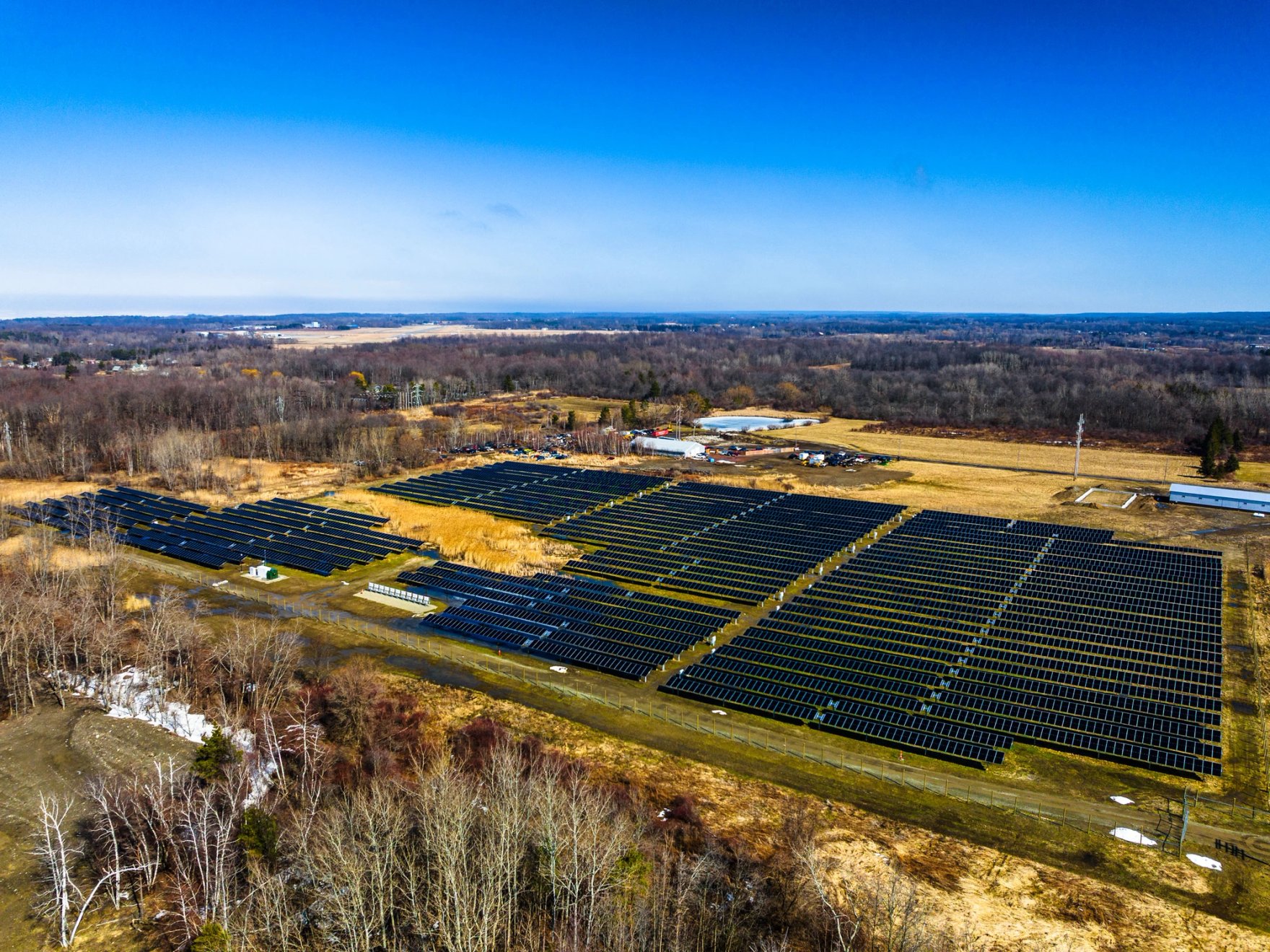
A question we are commonly faced with is why companies like Nexamp develop on agricultural land instead of rooftops.
Oftentimes, the choice between ground mount and rooftops is framed as though one is inherently good and the other inherently bad. In reality, the more important question to ask is which sites can deliver the most benefit with the fewest tradeoffs? For Nexamp, this is often where farmland emerges as a winner. While rooftop solar plays an important role, agricultural land provides the scale, speed, and long-term viability needed to support community solar and other large-scale projects.
At a glance
- Agricultural land often provides the space and flexibility needed for large-scale solar projects.
- Agrivoltaics allows solar generation, grazing, pollinator habitat, and some crop production to coexist.
- Community solar leases on farmland can create stable, long-term income for farmers and landowners.
- Community solar leases on rooftops are often placed on higher value real estate, meaning a higher lease rate which reduces the savings we can pass on to our customers.
- Rooftop solar also produces less energy than ground mounted solar because the panels are on a fixed, whereas ground mounted panels use a single access tracker
- Ground mounted projects on agricultural land mean we can avoid installing on buildings with higher liability, in a co-habitat with other tenants, often creating higher project costs.
- Community solar expands access to clean energy for renters and households without access to solar-ready roofs and up-front project capital.
Why Agricultural Land Often Makes Sense for Solar Development
Cost is one of the primary reasons developers frequently opt to build on green fields rather than rooftops. Saving on costs results in savings for our customers.
Developing a project on rooftops takes more time and resources. Developers end up paying a higher lease rate only to result in a project that produces less power and is encumbered with a greater number of landlord conditions.
Rooftop solar has a place in several scenarios, such as, in dense urban areas where power is needed the most, or on buildings that have a high energy need but lack ground area to install panels.
Ground-mounted solar projects can be designed and optimized without many of the constraints imposed by existing buildings. Developers have greater flexibility to orient panels, maximize energy production, and build projects large enough to serve entire communities.
At Nexamp, we typically develop ground-mounted solar projects on agricultural land because those sites are able to support solar at the scale and efficiency we need to serve local communities, while creating meaningful benefits for the landowners and farmers with whom we partner. In many cases, the land can continue serving agricultural purposes through agrivoltaics, pollinator habitats, or grazing, which means it’s not an either-or choice between clean energy and agriculture; the two can coexist.
The Benefits for Farmers and Landowners
Solar development can provide meaningful economic benefits for farmers and rural landowners.
Farmers in the United States are facing mounting pressures, from rising costs to low crop and export prices. Leasing land for solar offers farmers stable, long-term income, diversifying their revenue streams through consistent lease payments and offering a degree of predictability otherwise undermined by variable crop yields and changing commodity prices. This financial stability can support families looking to retain ownership of their land and keep it in agricultural production over the long term. In many cases, solar land leases offer a viable alternative to selling the land for more permanent forms of development.
In addition to the financial benefits, there are practical benefits for farming operations as well.
On-site benefits for farmers include:
- Reduced water evaporation from shaded soil
- Improved water-use efficiency for some crops
- Better crop resilience in extreme heat and drought conditions
- Soil resting to recover nutrients and support more robust crop yields in the future
- Grazing opportunities that reduce mowing needs and keep land in agricultural use
Further, for farmers that use livestock, solar grazing can be an especially attractive proposition. Sheep work to maintain the vegetation beneath arrays, lowering maintenance needs while creating another way for the land to stay productive.
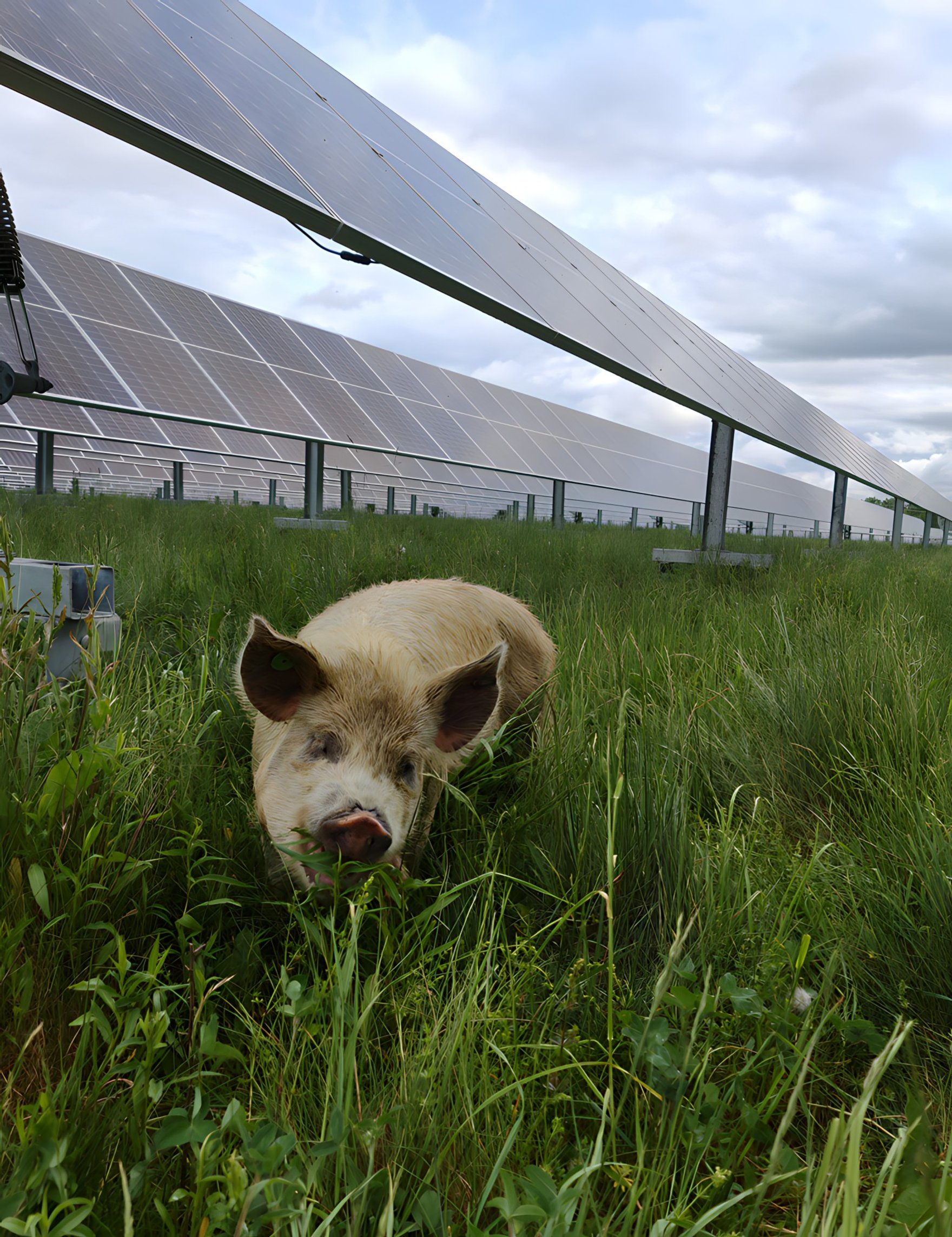
Solar and Agriculture Can Coexist Through Agrivoltaics
A common misconception is that solar development permanently removes farmland from agricultural use.
In reality, many projects incorporate agrivoltaic practices that allow solar generation and agriculture to coexist on the same property.
Depending on the site, agrivoltaic systems may support:
- Sheep grazing
- Pollinator-friendly habitats
- Native vegetation restoration
- Certain crop production
These approaches allow landowners to generate clean energy while maintaining productive agricultural uses and supporting local ecosystems.
Why Rooftops Aren’t Always the Best Fit
Rooftop solar remains an important part of the clean energy mix, but it is often more constrained than ground-mounted development.
The suitability of a rooftop depends on numerous factors, including:
- Roof size and orientation
- Structural integrity
- Shading from trees or nearby buildings
- Existing and future rooftop equipment and obstructions
- Property ownership and leasing encumbrances
Even when a roof appears large enough, much of the available space may be unusable due to safety setbacks, access pathways, HVAC equipment, skylights, or shading. Building owners also need to maintain an allowance for future use, and with the rise of data facilities, we are seeing the allowance for future cooling equipment take over a sizeable portion of the roof.
Additionally, many households and businesses are unable to install rooftop solar because they rent, lack sufficient upfront capital, or do not have a solar-ready roof.
These constraints can make it difficult to develop rooftop community solar at the scale needed to serve the broader communities' energy needs.
Where Rooftop Solar Thrives
While agricultural land is often well suited for community solar development, rooftop solar remains an important part of a diverse energy system.
Rooftop solar can be an excellent option when:
- Property owners want to generate electricity on-site
- Buildings have large, unobstructed roofs
- Structural conditions support long-term solar installation
- Businesses and homeowners want greater control over their energy costs
The most effective clean energy future includes both rooftop and ground-mounted solar working together to meet our growing demand.
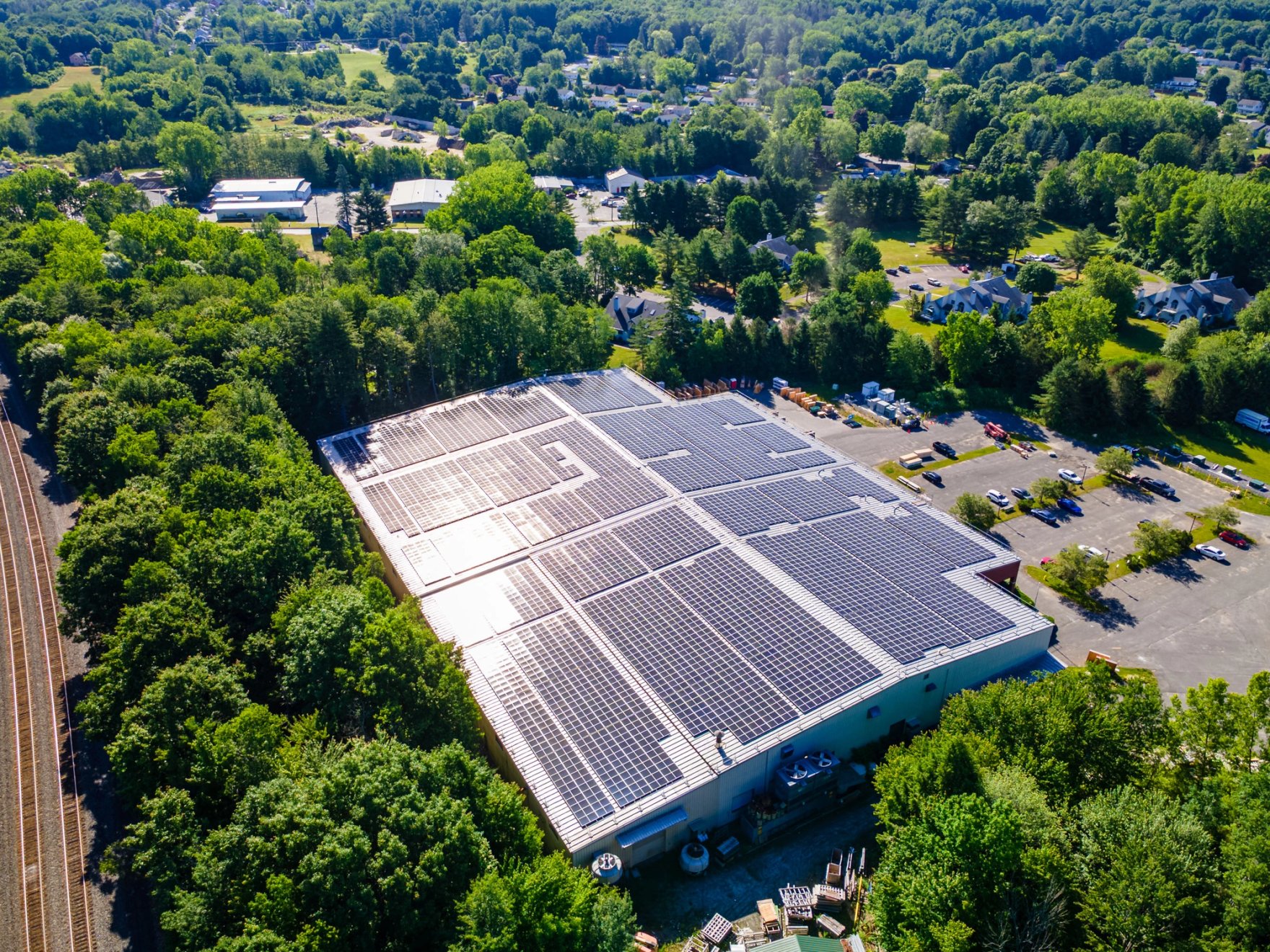
The Bigger Picture
The debate between farmland and rooftops is often presented as an either-or choice. In reality, both have important roles to play.
At Nexamp, agricultural land is often the best option because it can support larger projects, create stable income opportunities for landowners, preserve productive land use through agrivoltaics, and expand access to clean energy through community solar.
Rooftop solar remains a valuable option but can be limited by site-specific constraints that can make large-scale deployment slower and more challenging.
This is why Nexamp commonly develops projects on agricultural land—because agricultural land often provides the most practical path to delivering affordable clean energy benefits to communities while supporting farmers and landowners.
FAQs
In the end, the goal is not to choose between solar and agriculture. It is to develop solar in ways that strengthen local communities, preserve productive land use where possible, and expand access to clean energy for everyone in the utility network.