
%20--%3e%3csvg%20version='1.1'%20id='Layer_1'%20xmlns='http://www.w3.org/2000/svg'%20xmlns:xlink='http://www.w3.org/1999/xlink'%20x='0px'%20y='0px'%20viewBox='0%200%2030%2029'%20style='enable-background:new%200%200%2030%2029;'%20xml:space='preserve'%3e%3cstyle%20type='text/css'%3e%20.st0{fill-rule:evenodd;clip-rule:evenodd;fill:%23FFFFFF;}%20%3c/style%3e%3cg%20id='Symbols'%3e%3cg%20id='Footer'%20transform='translate(-468.000000,%20-360.000000)'%3e%3cg%20id='Group-5-Copy'%20transform='translate(468.000000,%20360.000000)'%3e%3cpath%20id='Fill-1'%20class='st0'%20d='M17.1,26.8h9.3c0.2,0,0.4-0.2,0.4-0.4V2.6c0-0.2-0.2-0.4-0.4-0.4H2.6c-0.2,0-0.4,0.2-0.4,0.4%20v23.8c0,0.2,0.2,0.4,0.4,0.4h12.3v-8.2h-3.3c-0.6,0-1.1-0.5-1.1-1.1s0.5-1.1,1.1-1.1h3.3v-4.8c0-2.3,1.8-4.1,4.1-4.1h3%20c0.6,0,1.1,0.5,1.1,1.1S22.6,9.7,22,9.7h-3c-1,0-1.9,0.8-1.9,1.9v4.8h3.3c0.6,0,1.1,0.5,1.1,1.1s-0.5,1.1-1.1,1.1h-3.3V26.8z%20M26.4,29H2.6C1.2,29,0,27.8,0,26.4V2.6C0,1.2,1.2,0,2.6,0h23.8C27.9,0,29,1.2,29,2.6v23.8C29,27.8,27.9,29,26.4,29L26.4,29z'/%3e%3c/g%3e%3c/g%3e%3c/g%3e%3c/svg%3e)

%20--%3e%3csvg%20version='1.1'%20id='Layer_1'%20xmlns='http://www.w3.org/2000/svg'%20xmlns:xlink='http://www.w3.org/1999/xlink'%20x='0px'%20y='0px'%20viewBox='0%200%2030%2030'%20style='enable-background:new%200%200%2030%2030;'%20xml:space='preserve'%3e%3cstyle%20type='text/css'%3e%20.st0{fill:none;stroke:%23FFFFFF;stroke-width:2;stroke-linecap:round;stroke-linejoin:round;}%20.st1{fill:none;stroke:%23FFFFFF;stroke-width:2.6;stroke-linecap:round;stroke-linejoin:round;}%20%3c/style%3e%3cg%20id='Symbols'%3e%3cg%20id='Footer'%20transform='translate(-568.000000,%20-360.000000)'%3e%3cg%20id='Group'%20transform='translate(569.000000,%20361.000000)'%3e%3cpath%20id='primary'%20class='st0'%20d='M20,22v-4.8c0-1.8-1.3-3.2-3-3.2l0,0c-1.7,0-3,1.4-3,3.2V22'/%3e%3cpath%20id='primary-2'%20class='st0'%20d='M26.4,28H1.6C0.7,28,0,27.3,0,26.4V1.6C0,0.7,0.7,0,1.6,0h24.9C27.3,0,28,0.7,28,1.6v24.9%20C28,27.3,27.3,28,26.4,28z%20M7.8,14v7.8%20M14,17.1V14'/%3e%3cline%20id='primary-upstroke'%20class='st1'%20x1='7.8'%20y1='8.5'%20x2='7.8'%20y2='8.1'/%3e%3c/g%3e%3c/g%3e%3c/g%3e%3c/svg%3e)
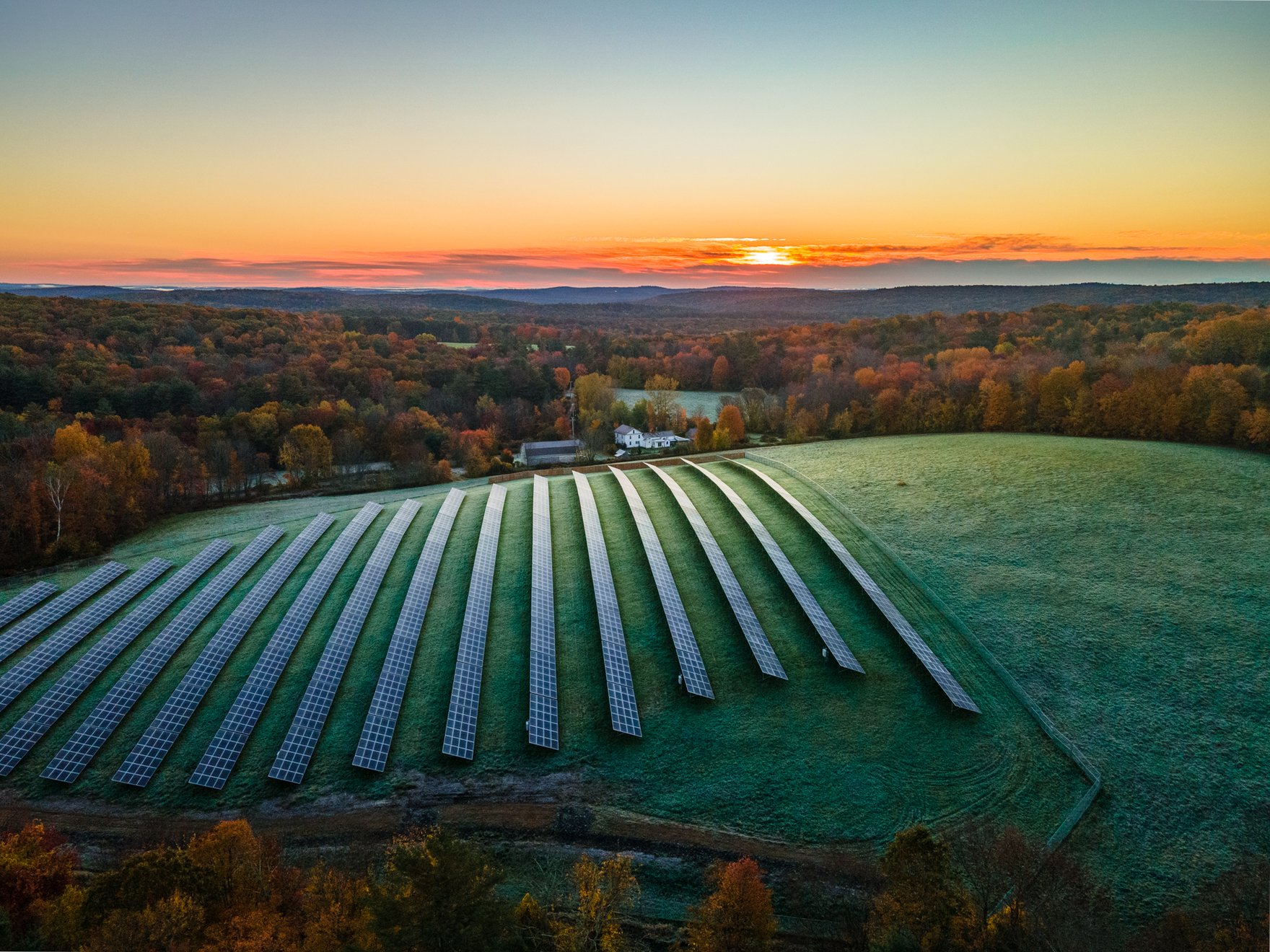
Are you looking for a hassle-free way to support domestic energy production? Community solar might be the right solution for you. This accessible clean energy option doesn’t require any installation, making it ideal for renters and those living in homes not suited for rooftop solar panels. Community solar is a straightforward, no-installation-needed approach to clean energy.


What is community solar?
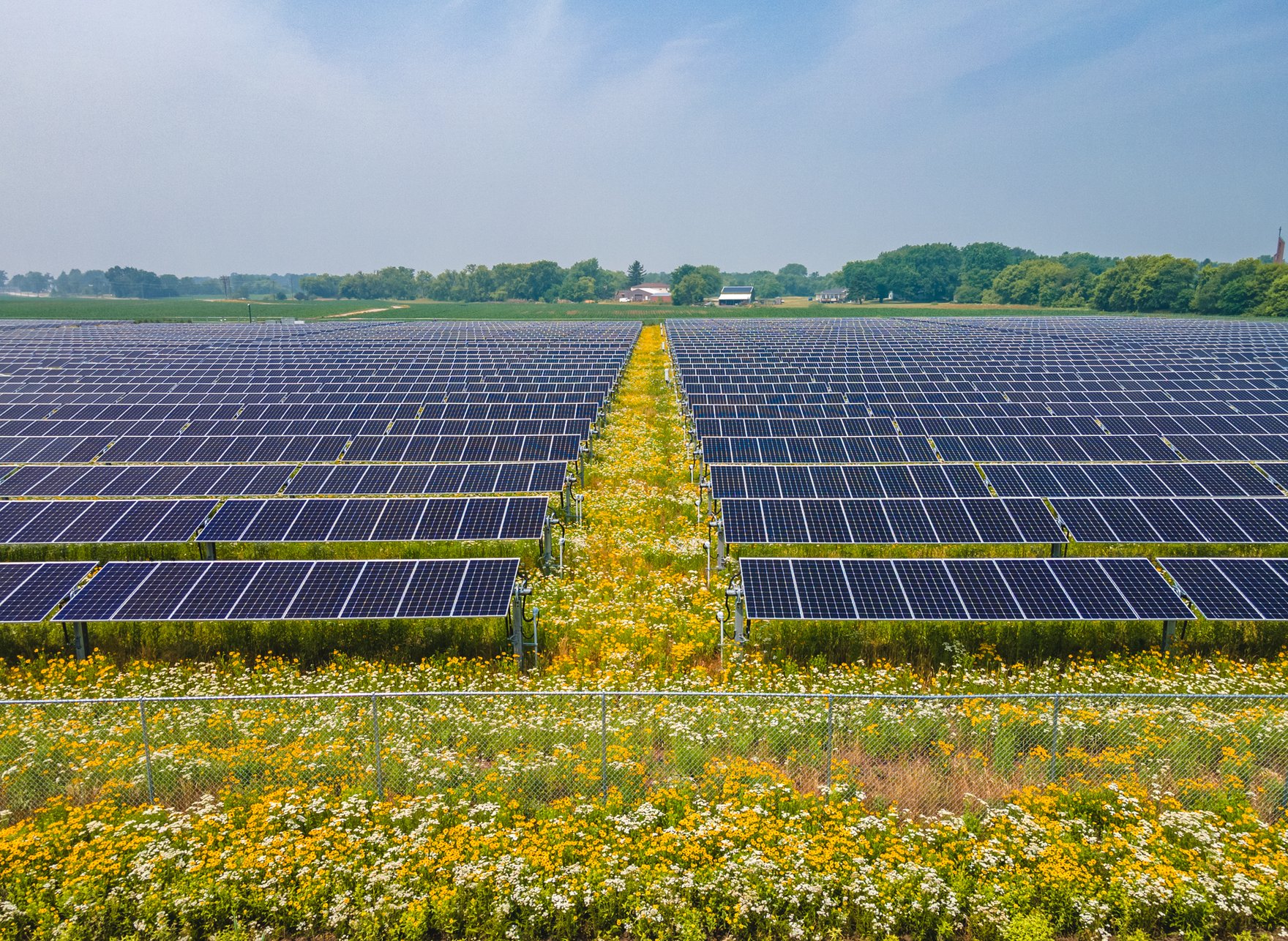
Community solar relies on large-scale solar arrays, often called solar farms or gardens. These shared solar farms generate energy that is sent to the local power grid and allow multiple participants to benefit from solar energy generation. Customers of these solar farms see annual savings on their electricity costs while the grid is supported by clean, domestic energy. It really is a win-win!
Check your eligibility for Nexamp community solar
How does community solar work?
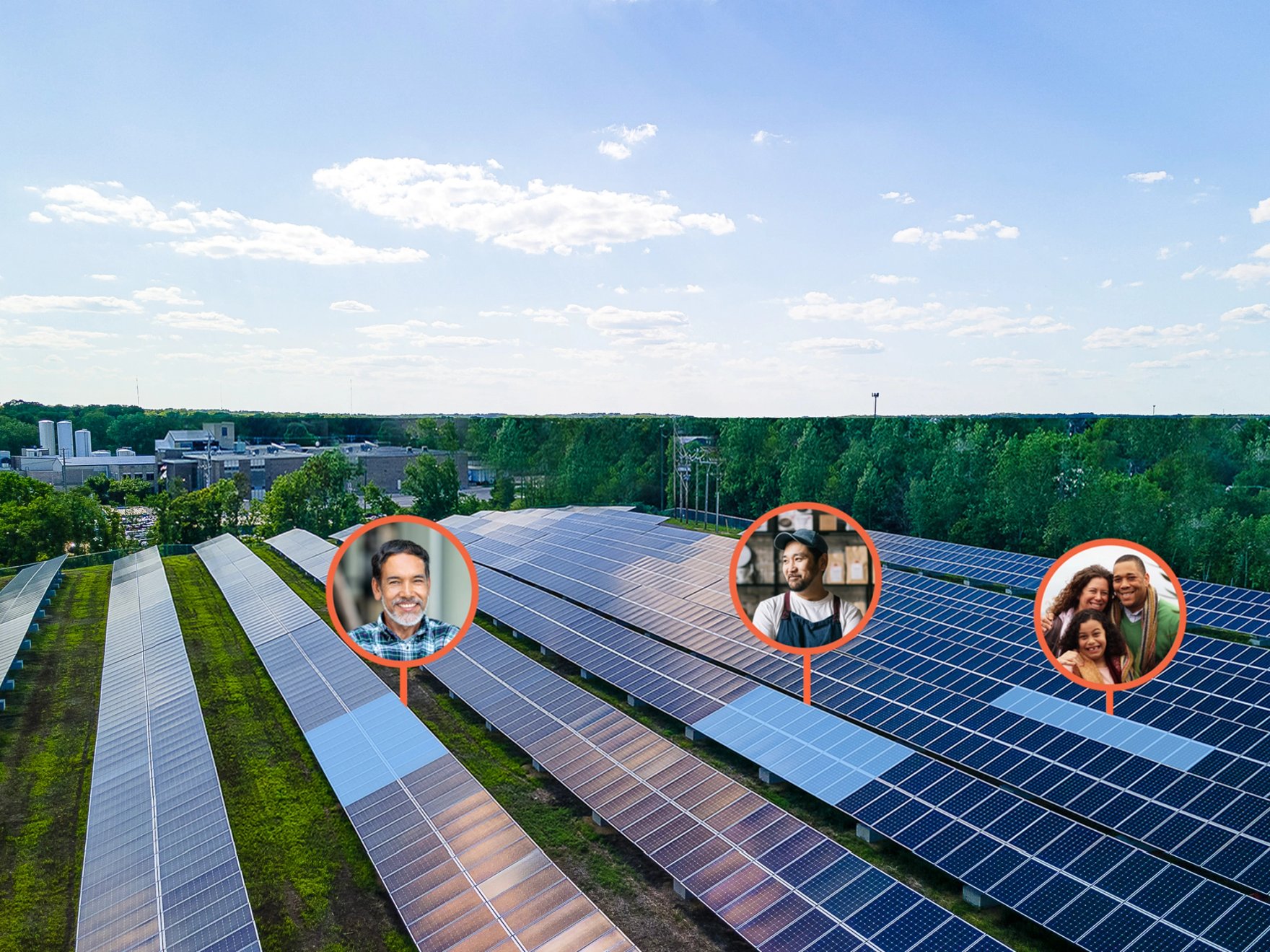
Community solar offers a unique opportunity for renters, homeowners, and businesses to tap into solar energy without installing solar panels. Here’s how it works:
- Sign up to claim your spot. Provide some basic information and your utility account details
- Get assigned to a farm. As soon as a spot opens up, we’ll add you to a farm. We’ll match you to the perfect spot based on your electricity needs.
- Save on electricity costs. You’ll get a discount on your electricity bill in the form of credits. You pay Nexamp for these credits at a guaranteed discount, helping you save.
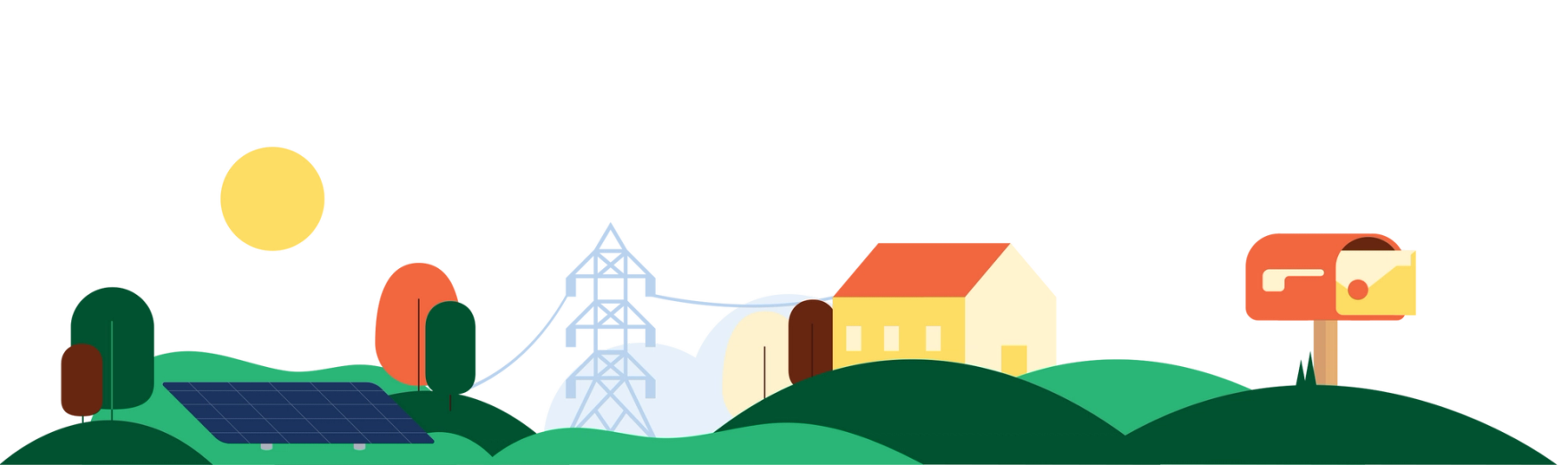
The credits customers receive are calculated through virtual net metering. We ensure that customers are assigned a portion of a solar farm that matches their annual electricity usage. The number of credits that appear on each electricity bill reflects how much energy the customer’s share of the farm generated.
At Nexamp, we manage the entire project lifecycle, from construction through operation. This vertically integrated approach allows us to provide access to community solar without upfront costs, fees, or credit checks.
What’s the difference between residential solar and community solar?
Both approaches to solar have the same goal of generating clean power from the sun, the difference is their approach to the task!
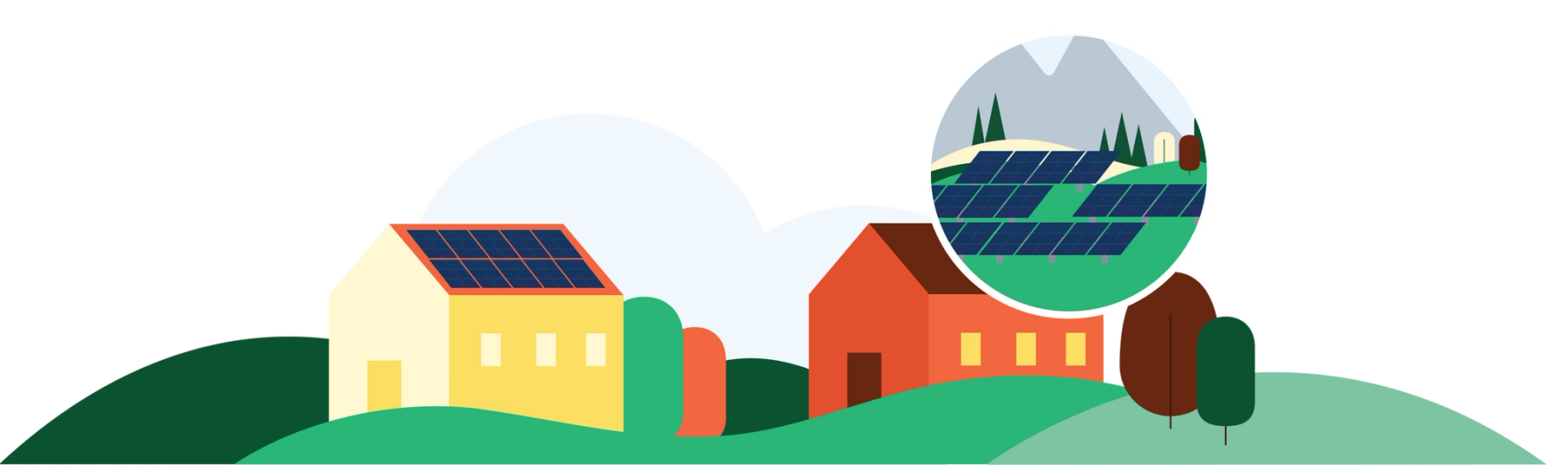
Residential solar or rooftop solar. With rooftop solar, panels are installed on individual properties. Residential solar arrays are designed to meet the energy needs of the property owner alone, supplying them directly with clean energy. On occasion, excess energy generated by these installations is fed back into the grid, but the expectation is that the energy will primarily be for the property.
Community solar is a shared resource that multiple individuals, households, and businesses can tap into. This involves the development of large solar arrays which generate energy that is fed into local utility grids. This communal approach maximizes the use of resources while extending the benefits of clean energy more broadly. By enabling a shared contribution to alternative energy solutions, community solar encourages a collective commitment to a more sustainable future.
Who is eligible for community solar?
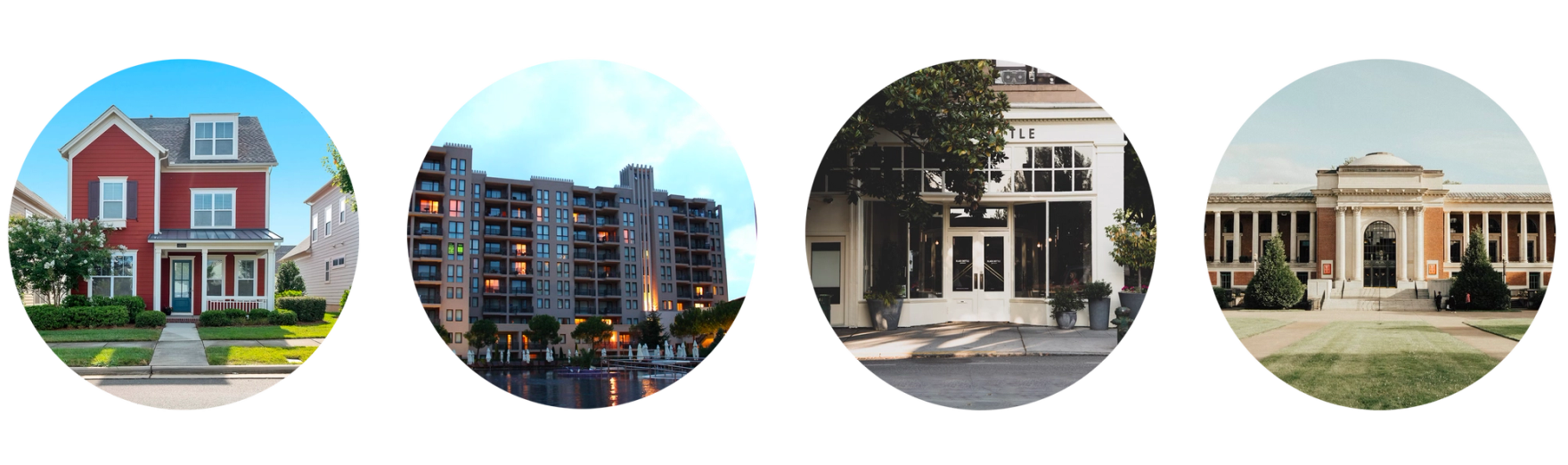
One of the primary challenges of rooftop solar is its accessibility. Barriers like high upfront costs, the need for a suitable roof, and homeownership can all be deterrents that prevent people from solar adoption. Luckily, community solar is an easy alternative that is designed to be accessible and simple. So who is eligible for community solar?
- Renters and homeowners
- Low-to-moderate income households
- Businesses
- Universities
- Hospitals
- Religious organizations
- Municipalities
How much can I save with community solar?
An individual's community solar savings are based on several factors, such as the state they live in and their income. The chart below provides a breakdown of Nexamp’s community solar discount by state.
| ME | MD | MA | MN | NJ | NY | IL | |
| Annual Savings | 15% | 10% | 12.5% | 10% | 15% | 10% | 15% |
How does community solar billing work?
It can sound too good to be true–saving while supporting clean energy without any upfront costs or installation. Here’s a breakdown of how billing works and how community solar savings are calculated.
- Two bills: Customers will continue to receive a bill from their electricity provider as well as a bill from Nexamp. Here's what those two bills reflect.
- Electricity bill: Once the farm is live, customers' electricity bill will also show the community solar credits from the production of the subscriber’s share of the solar farm, which will lower the total amount they owe to their electricity provider.
- Nexamp bill: This bill will be for the community solar credits that showed up on the electricity bill, always at the previously agreed-upon discount.
- Saving: Nexamp and other community solar providers receive state and federal incentives for community solar. These incentives allow us to offer credits to our customers at a guaranteed discount, and the discount is how customers save.
- Crediting example: For example, let’s say that a customer's electricity bill is $110, and they receive a $100 credit. This would mean that they pay $10 to their utility. When they are billed for their credits, Nexamp will apply a discount of between 10-15%, depending on the terms of the community solar agreement. This means that the customer will pay between $85 (15% discount) and $90 (10% discount) for their electricity bill credits. Although they are receiving a second bill, the total amount they pay goes down from $110 to between $95 and $100. Over a whole year, those savings can add up.

What is seasonal variability with community solar?
Solar production is influenced by the seasons.
Summer months: when days are longer and warmer, solar production tends to increase.
Winter months: when days are shorter, and there is more cloud cover, solar production is typically lower.
Nexamp’s community solar program was created with the seasons in mind and is designed to help you save money over the course of the year despite these fluctuations. This means that in the summer and early fall, customers will typically see more credits, sometimes more than they need. In the winter, they usually see fewer credits. However, unused credits from the summer months will roll over until they are needed. This is how customers save annually with community solar, despite seasonal variability.

Is there a downside to community solar?
Community solar offers a range of benefits, and while we want to emphasize those, it is essential to recognize the nuances as well.
The downside to Nexamp is that customers will not own solar panels and will not be eligible for solar tax credits through their participation in Nexamp community solar. This is a general downside to community solar as a whole.
On the bright side, this means they are not responsible for the operation and management of any solar panels, do not need to incur installation costs, and don’t need to worry about how many solar panels are right for them — we take care of everything!
Furthermore, with Nexamp,customers do not pay any upfront costs, and they always have the option to cancel their account at no cost.
What are the benefits of community solar?
Community solar offers an easy pathway toward a greener future. The difference between community solar and local solar is its accessibility, eliminating the need for upfront investment typically associated with personal rooftop solar installations. This opens the door for individuals passionate about clean energy to participate without financial barriers. As an industry leader, Nexamp empowers individuals to join to a community solar farm effortlessly. When individuals sign up for Nexamp community solar, they’re championing environmental well-being and securing long-term energy savings at no upfront cost.
With shared solar, community benefits are realized alongside individual benefits, bringing together businesses, renters, homeowners, non-profits, and more to share in the sun's power. Community solar builds grid reliability, helps local businesses, organizations, and residents save money, and contributes to domestic energy production and job creation. It’s accessible, abundant, and practical, making it a critical part of America's energy landscape.